A Practical Guide to the General Maintenance Practice Test
Quiz General Maintenance Practice Test
Elevate your understanding of maintenance concepts with our Simulator General Maintenance Practice Test. This innovative tool offers an engaging way to prepare for assessments in general maintenance topics. Featuring a variety of questions that mirror real-world scenarios this practice test ensures you grasp critical concepts thoroughly. Use it to refine your skills boost your knowledge and increase your chances of success in the maintenance field with ease and efficiency.
Here are the most popular products... Try them now!
1
How to Use the General Maintenance Dumps as a Resource to Prepare for the GMPT
The General Maintenance Practice Test is not just about knowing tools or how to fix something, but it’s also about understanding what the GMPT actually measures (what are the elements of the GMPT) and how it is constructed. When creating a study plan to take the GMPT, many students have trouble figuring out which content areas they should study first, so it is important to have a guide like this one.
This guide describes the main content areas of the GMPT in plain English for an average studier in the U.S. It will show you the major content area to study for the GMPT, the probable order of examination, what to check prior to registering for the GMPT, and how to create a viable GMPT study plan based upon what actual maintenance technicians do for work.
It also highlights practical strategies to connect theory with real-world maintenance scenarios, helping you retain concepts more effectively. You’ll learn how to prioritize high-impact topics, manage your study time, and build confidence before exam day. By following this structured approach, you can prepare smarter instead of simply studying longer.
Quiz General Maintenance Practice Test
Topics and percentages
Based on exam questions
- Hydraulics and Pneumatics15%
- Electrical Systems Maintenance15%
- Mechanical Systems Maintenance15%
- Computers and PLCs (Programmable Logic Controllers)14%
- Preventive Maintenance14%
- Electrical Systems Troubleshooting and Repair2%
- Equipment Installation and Commissioning2%
- Science2%
- Safety procedures and protocols2%
- Plumbing Systems Maintenance and Repairs2%
- Preventive Maintenance and Inspections2%
- HVAC System Maintenance and Repairs2%
- Troubleshooting Techniques2%
- Production and maintenance2%
- Facility Operations and Equipment Management2%
- Hand and power tools2%
- Household objects2%
- Science and physics2%
- Mechanical Systems Diagnostics2%
- Building Structure and Integrity2%
The most trending products:
You may be interested in reading these other articles too:
What is the General Maintenance Practice Test?
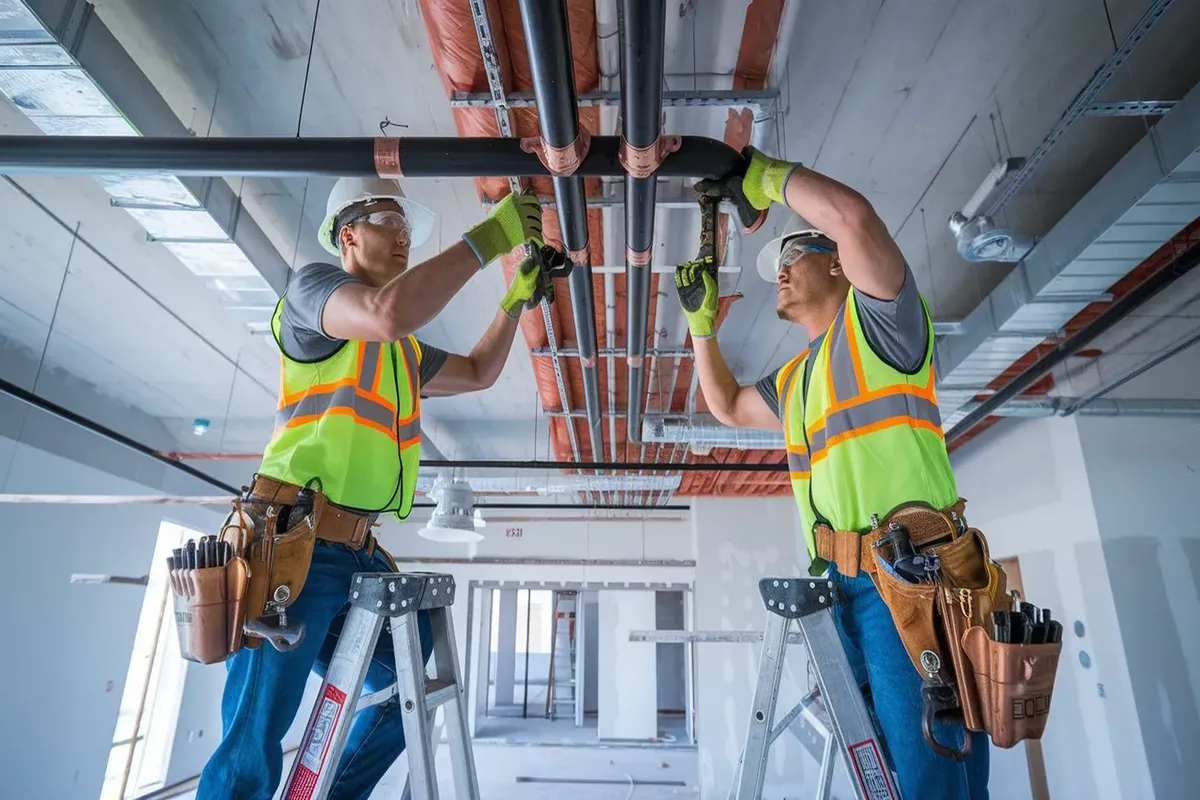
The general maintenance practice test is an assessment of whether an applicant can perform typical maintenance activities within the areas of mechanics, electricity, health, and building systems. Employers and/or training providers generally use this as a tool for assessing someone’s skill level as opposed to solely understanding how something works.
A general maintenance practice test typically emphasises your troubleshooting abilities, preventative maintenance activities, equipment usage safely, and overall knowledge of the systems related to maintenance.
Sometimes when searching for information related to the general maintenance practice test, you may find references to general maintenance dumps, but referring to these typically relates to acquiring question sets that may have been copied possibly containing items that do not contain reference sources or that contain errors in the explanation of an answer, or have unpredictable terms. The best way to prepare for the General Maintenance Practice Test is to learn about specific subjects and learn to understand why the answer is correct.
Sample Practice Questions (General Maintenance Practice Test)
1 What does the term "VFR" stand for?
2 What is the primary function of refrigerant in an HVAC system?
What are main topics in General Maintenance Practice Test

The exam’s content normally mirrors actual activity from the job of a general maintenance technician. Thus, an exam is broad-based in nature and tests multiple skill sets rather than just one single trade. It is due to the broadness of the exam that many people have sought out General Maintenance Dumps in an attempt to memorize “answers” instead of utilizing a structured review process.
Hydraulics / Pneumatics covers pressure, flow, actuators, valves, leaks, symbols and common failure points. Understanding how fluid power and air systems function, how to isolate faults within them, and working safely prior to servicing a system is critical.
Electrical Systems Troubleshooting and Repair primarily covers simple circuit reading; locating wiring faults; checking either continuity or voltage; and knowing why a breaker, relay, motor or switch failed. Most of the testing in this section will use practical logic versus advanced mathematics.
Computers / PLCs cover basic control systems; inputs and outputs; ladder logic concepts; sensors; faults; and machine-to-machine communication. For most modern maintenance-related jobs, being a programmer is not necessary, but a person does need to understand how automated equipment responds.
Equipment Installation & Commissioning determines whether an individual understands how to set up components, align components, verify configuration, perform start-up checks, and identify early signs of problems when new equipment goes into operation.
Science covers concepts of force, motion, energy, heat, pressure, and simple measuring devices. This subject applies to maintenance-related decisions because many maintenance-related decisions require applying these fundamental concepts of physics to assist in determining what repairs, if any, are necessary.
Safety procedures/protocols is a key subject. In the United States, safe maintenance can typically be linked back to lock out and hazardous energy control procedures given in . Even if a test does not measure an individual’s knowledge regarding safety procedures/protocols as a legal requirement, the test still typically expects all examinees to be familiar with safe isolation procedures.
Plumbing Systems Maintenance / Repairs includes valves, fittings, flow, drain, leak, clog, pressure problems, and common repair procedures for building plumbing systems.
Preventive maintenance/inspections include lubrication, inspection frequency, service intervals, wear check, record, and identify failure points prior to failure. This section’s questions reward individuals that understand reliability as opposed to just making repairs due to failures occurring.
HVAC system maintenance/repairs generally includes filters, air flow, thermostats, belts, motors, condensate, and basic refrigeration principles. Refrigerant-handling procedures often affect HVAC jobs within the United States, therefore, those individuals moving into this type of work must typically show proof of compliance with these procedures when taking a technician certification rules separately.
The contents of the test will reflect what you would encounter on the job. Therefore, the test will be broad and require many different skills from you as opposed to just being one type of trade skill. The broadness has led people to seek out General Maintenance Dumps in order to memorize answers instead of utilizing a structured review process.
Hydraulic and pneumatic systems include pressure, flow, actuators, valves, leaks, symbols, and common failure points. It is critical to understand how fluid power and air function in a hydraulic or pneumatic system, and how to isolate faults within these systems prior to servicing the system in order to work safely.
Troubleshooting and repair of electrical systems involves reading a simple circuit, locating wiring faults, verifying continuity or voltage, as well as understanding why a breaker, relay, motor, or switch failed; this portion of the test is practical logic rather than high-level mathematics.
Computer/PLC Systems include basic control systems, inputs and outputs, ladder logic concepts, sensors, faults, and machine-to-machine communication. Although you do not necessarily need to be a programmer, you will need to understand how automated equipment works in relation to automated equipment.
Installation of equipment and commissioning verifies the applicant has an understanding of how to set up, align, verify, perform start-up checks, and identify early physical signs of malfunction of new equipment when it is put into use.
Science is an application of basic concepts of physics, such as force, motion, energy, heat, pressure, and simple measuring devices. These concepts apply to making decisions on maintenance because you will need to apply basic physics concepts to determine what repairs, if any, will be needed.
Safety Procedures/Protocols is a major subject matter of the exam; in the US, safe maintenance is generally tied to the lockout procedure and hazardous energy control procedures defined in . However, even if a test does not assess your knowledge of safety procedures/protocols, as legally required, the expectation is that you should still be familiar with the safe isolation procedure.
Maintenance/repair of plumbing systems includes valves, fittings, flow, drain, leaks, clogs, pressure issues, and common repair techniques associated with building plumbing systems.
Preventive maintenance/inspections include lubrication, inspection frequency, service intervals, wear check, record, and identifying failure points before they fail. Questions in this category are designed to reward you for understanding reliability versus making repairs only when failures occur.
Maintenance/repair of HVAC Systems includes filters, air flow, thermostats, belts, motors, condensate, and principles involved in refrigeration. The following links describe how refrigeration procedures influence HVAC jobs in the respective states and have been referenced when discussing complying with these procedures when taking a hiring assessment.
Building structure and integrity includes walls, floors, doors, frames, roofs, seals, and other building elements that affect safe use and long term upkeep.
Registration process for General Maintenance Practice Test
The manner of registering for a General Maintenance Practice Test will depend on the entity administering the exam as this is typically used as an assessment for hiring and/or practice and is considered one national virtual license as there is no distinct publicly-managed booking system. So your first step will be to confirm whether the employer, recruiter, school, and/or testing provider will assign you the General Maintenance Practice Test directly or send you an invite upon completion of the job application process.
In most situations you will not actually book a public seat the way you would with a standard state license or trade code exam but gain access from the employer or testing platform through email, an applicant portal or a test dashboard. However, if you are using a study platform prior to taking the actual test yourself you can use their study materials and review exam-style study materials to assist you with the preparation for the actual test Easy Quizzz United States , or the PDF General Maintenance Practice Test . If your hiring process includes an in-person session, confirm identity rules and arrival instructions before test day by checking the testing basics .
There are several ways in which the cost of exam preparation varies. In many cases, it may be completely free, as your employer is paying for your assessment. Some candidates may need to purchase a specific set of study tools or pay a fee separately for those tools, while some training packages may include access to Web, mobile, and downloadable formatted material. As for payment, if your unit requires any payment, it can typically be made with a card via the provider’s check-out process or through the employer’s application process. If you are trying to make an informed decision on what study tools to use, check the platform’s structural features and determine whether your selected study course will provide you with online, mobile, or both types of access.
When it comes to the timing of the exam, most of these exams are not administered according to a national calendar, and there are limits on the number of seats available per exam in each of the qualifying locations on a national basis. Therefore, a candidate may receive an invitation from their employer to take the test at any time during their hire, and the provider may provide the same types of access to the exam on a year-round basis. In most cases, there will not be a predetermine number of years in which a candidate will be able to take their exam, and there will not be a cap on the number of candidates who may be able to take the exam. When choosing a study option, make sure you verify the process fully, and if someone offers you General Maintenance Dumps as a substitute for an appropriate booking or study plan, that is a time to carefully verify the process.
Examining General Maintenance Practice Tests
The General Maintenance Practice Test can frequently be found online (such as for an application process) or through web-based study systems. Some organizations prefer remote delivery as it is more efficient in assigning positions and providing scalability across all candidates.
Examples of using this test may be at a hiring facility, training centre or supervised testing facility; as long as there is some form of controlled conditions (which can occur during interviews, onboarding steps or technician screening sessions).
The confusion that can often come from general maintenance dumps is often due to the way the test is delivered which is determined by the provider and a test labelled for the same will have multiple methods of delivering the same. Ensure to verify what is required of you (webcam, photo ID, quiet area or location) before test day.
Format of the General Maintenance Practice Test
The format of the General Maintenance Practice Test is set up for 60 minutes of testing time and a passing score of 70%. This provides clear information about how long to study for taking the General Maintenance Practice Test.
The General Maintenance Practice Test itself is multiple-choice and is a time restricted, broad-based assessment rather than a narrow trade-based assessment. The results of the General Maintenance Practice Test will be reported back to you as point value (e.g., 1 to 5 points per correct answer, 0 points per wrong answer), however, the scoring rules will vary for each state or agency that issues the practice test.
The General Maintenance Practice Test uses a large database of questions to pull from but does not guarantee that you will see all of those questions during a given quiz or serve you multiple quizzes at once. General Maintenance Practice Tests consist of randomly selected multiple-choice questions, and the test question composition varies from session to session making it harder to interchange knowledge across multiple sessions.
Performance based on the number of correct answers, percentage of those tested who did pass and average score of those tested is not well documented in the review material but rather is unknown; therefore, it is recommended that candidates verify the scoring requirements for their specific state and identify the requirements for the passing percentage.
It is important to view 70% as a minimum performance level to go beyond which adds tremendous pressure and significant timeframe restrictions to candidates taking the test during the actual test day.
It is important to note also that difference between this general maintenance practice test and state boards is that there are no other derived state tests from the General Maintenance Practice Test do not exist.
The difference between this test format from the state boards and those of general maintenance practice is that these tests are a combination of many subjects which is sometimes confused with the test format from detailed practice of taking the General Maintenance quiz, as this will produce double test scoring in comparison to simply remembering answer strings.
Who should take the General Maintenance Practice Exam?
The General Maintenance Practice Exam is designed for people with hands-on technician, building maintenance, facilities operations, plant maintenance, or similar skill sets. Additionally, it can serve as a checkpoint for current workers who wish to validate their existing level of knowledge before pursuing a new career opportunity.
For candidates interested in mechanical maintenance, the General Maintenance Practice Exam may be helpful to entry level individuals, to helpers who are transitioning to technicians and to experienced candidates who wish to demonstrate general knowledge of multiple systems rather than a specialized area.
In most cases, the prerequisites to take the General Maintenance Practice Exam will be less rigid than those of someone applying for a licensed trade. The specific requirements that are in place will vary by employer. While most of them do not require a degree or a state issued license for you to sit for an assessment, some employers do want candidates to be of a minimum age, have the right to work, be subject to background checks, or have a certain amount of experience with tools and safe work methods.
How Hard Is the General Maintenance Exam?
The General Maintenance exam is challenging because it covers so many different topics. You might have lots of experience using hand tools and doing mechanical repairs, but when you’re in the test, you could lose a lot of points for getting questions wrong about electrical logic, PLC basics or HVAC fundamentals.
Time is also a big factor for the General Maintenance Test. Someone who regularly works with the material can still have trouble if they have trouble reading quickly, are slow to make simple calculations, or spend too long on just one fault scenario before moving on to the next fault scenario. If you’re really serious about understanding the level of difficulty for the General Maintenance Test, try taking some timed test sets across the entire topic range and reviewing your weakest areas one at a time or give yourself 30 seconds on each question.
What Are the Professional Benefits?
When you take the General Maintenance Test, you’ll be able to show prospective employers that you have more than one skill set or method of fixing things. Most companies will need technicians who can work with all different types of equipment and jobs and will expect you to make that transition from doing mechanical checks, to electrical checks, to preventative maintenance and also to performing basic repairs within the same day.
So, because of this, the General Maintenance Test will be of great value for employers who could hire you for a job, or for people who could be moving internally to a job in another department, or for people performing self-assessment of their skills. In general, the information you learn while taking the General Maintenance Test; even if you don’t receive a state license; can help you create good habits at work, like safely isolating, fault finding, inspecting things properly, and making good decisions about preventative maintenance.
How to Get Ready for and Pass Your General Maintenance Exam
Organizing your exam into blocks will help you utilize your study time more effectively than trying to review all the material at once. You should devote one whole week to studying electric basics/safety, another to mechanical systems and preventative maintenance, and the final week towards HVAC/plumbing/controls. By structuring your preparation this way, it will give you a focused review and assist you in identifying areas where you are weak.
Using a full timed session during your study time provides you with a much better experience than simply reading the material without a set time limit. This will help establish your pace, concentration level, and ability to recall the information. If you would like to practice in a structured way, the Employment Test - General Maintenance Practice Test and the can help you review by topic and by test mode. You can also manage your study flow from the Buy General Maintenance Practice Test .
You should use both Easy-Quizzz Simulator and Easy-Quizzz Mobile App as tools for repeating the material, not as shortcuts to get through the material quickly. If you have done multiple General Maintenance Dumps already, it is important to understand that copying the answer will not teach you the reason behind the fault or what the safest repair step is. To review this material on your mobile device, you can use the Android or iOS version of the application, depending on which type of device you have.
To develop a good learning system, you should plan on mixing times of recalling and reviewing your material. The first time you do a time based quiz, make a note of each question you missed, and then return to the original topic you missed on the second time. This is very useful when trying to practice electrical work in the automotive field as you also have to practice recognized concepts in workplace electrical safety guidance before you move into troubleshooting questions that involve energized equipment.
Easy-Quizzz has many great features for you to practice taking the official exam
Once you know how the official exam is designed, the purpose of taking practice quizzes is to help you convert that knowledge into consistent performance. This means that you should not just rush through a group of random quiz questions. Instead, you want to learn how to take a quiz while also learning how to keep track of time and recover from mistakes as well as see which topics are still slowing your time down.
The preparation set for practice includes 666 questions, so you can go back to the same subject and ask questions in multiple ways each time you take a practice quiz and not get duplicate questions in sequence. Each practice session has a 60 minute time limit so you can practice at the same pace you will be using on exam day. The average success rate that you will see for each of these practice quizzes will be 70, therefore, if you want to see if you are progressing in the right direction you can use that number as your benchmark.
The scoring system does show you a number of blank (not answered) values for the correct, wrong and skipped responses in the practice exam score data, so you have to use the score as a measure of your progress and make sure to verify the final rules of your selected testing mode before using exact point calculations for accuracy. The score you receive is important; however, the most important part of your practice quiz is the topic groups that are continuing to decrease your total score.
| Topic | Distribution |
|---|---|
| Hydraulics and Pneumatics | 100 |
| Repair and Electrical Systems Troubleshooting | 12 |
| PLCs (Programmable Logic Controllers) and Computers | 95 |
| Commissioning and Equipment Installation | 12 |
| Science | 12 |
| Safety procedures and protocols | 12 |
| Repairs and Plumbing Systems Maintenance | 12 |
| Inspections and Preventive Maintenance | 12 |
| HVAC System Maintenance | 12 |
| Troubleshooting Techniques | 12 |
| Production and maintenance | 12 |
| Electrical System Maintenance | 98 |
| Mechanical System Maintenance | 98 |
| Equipment Management and Facility Operations | 12 |
| Preventive Maintenance | 95 |
| Hand and power tools | 12 |
| Household objects | 12 |
| Science and physics | 12 |
| Mechanical System Diagnostics | 12 |
| Integrity and Building Structure | 12 |
Topic-level practice helps in a very practical way. Knowing where there are gaps in your understanding can help you identify knowledge deficiencies quickly. If you are continuously making the same kinds of errors in a particular subject area, you can concentrate on re-reading the material you already know rather than spending time on materials that do not provide you with new information. It will also help you to monitor your improvement in those areas through multiple rounds of structured practice within the same subject area.
The repetition of structured practice will provide you with confidence because you will now understand the materials and structure of the exam rather than just having a vague idea. While structured practice will not provide you with a guarantee of passing the exam, it should provide you with a more structured approach to your study preparation and much more honesty and usefulness for your effort.
Helpful Trusted Resources for Test Day
Do appropriate research related to your respective test days, safety protocols, and any specific requirements for your job; for instance, if your desired employment involves the control of hazardous energy, completing electrical work or performing refrigerant maintenance, reference the current U.S. Rules governing these duties so that you are able to create a study plan that will successfully correlate to what you’ll encounter daily and not solely based on practice test answers.
Frequently Asked Questions Regarding General Maintenance Practice Testing
How Long Do You Need to Study Prior to Taking Your Exam?
The answer to this question is dependent on what your background looks like. For instance, if you already work with tools and are familiar with performing routine repairs, you probably need less time to review mechanical basics and more time on controls; electrical troubleshooting; or HVAC terminology. If you are new to maintenance, you should give yourself enough time to review duplicate topics and complete multiple timed tests rather than trying to cram all of your studying into one weekend.
Is This Test Primarily a Theory or Practical Test?
Most of the varieties of this test lean towards practical applications. You need to grasp enough theoretical content to know what a system accomplishes; however, applying that information to trouble-shooting, inspections, safe working methods of operation and common repair selections is where the true challenge lies. A person who takes time to learn about definitions, but never practices scenarios, will normally find more difficulty than a person who practices real-world troubleshooting.
Can You Take This Test Online From Your Home?
There are many exams that you can take online with various hiring companies or as a study exam, however, there are many hurdles associated with taking an exam online. For example, some are completely unrestricted web exams, whilst others require under supervision or through a hiring company’s means. In all cases, confirm rules regarding your computer device, browser, and identity verification; all of which are required prior to your scheduled time.
What Do You Do If Your Electrical Knowledge Is Your Primary Shortcoming?
If electrical knowledge is the biggest thing standing in your way, you should begin with the basic principles, and create limits/products. Study the fundamentals of: circuits, switches, relays, motors, continuity, and various methods of logically trouble-shooting; once you are confident with these items, move on to additional difficulties in relation to trouble-shooting. Study small samples of mixed questions so as to identify trends on where you made mistakes versus guessing as to why you failed at a particular question.
Is It Important to Have Good Calculation Skills?
Calculation skills may be important, but generally speaking, this is probably not an extremely math intensive exam. More importantly, you will need basic reasoning-based calculations related to pressure; forces; measurement systems; and general electrical principles than you will advanced mathematical applications. Focus on first clearly reading the situation and selecting the safest and most logical answer.
The best way to prepare for your exam at the last minute is
In the last few days or hours before the exam, stop trying to review every detail. Focus on your mistake log, work through timed sets, and re-familiarize yourself with the safety rules/high-frequency items that are common to all maintenance jobs. If you still need organized practice, use a targeted set from employment test and focus on the subjects that still lower your score.